
De-escalation training Cologne
De-escalation and security training in Cologne
For security staff, customer-facing teams and facilities where conflict is part of everyday life: recognising tense situations early, addressing them calmly, bringing them under control and staying effective under pressure.
Training covers
- Spotting conflict early
- Communicating calmly and clearly
- Officer safety and control techniques
- Acting as a team under stress
At a glance
De-escalation training in brief
- What is de-escalation training?
- Training for handling tense situations: spotting the warning signs early, choosing your distance and position, communicating calmly and clearly, and stepping in without inflaming things further.
- Who is it for?
- For security staff, reception and service teams, employees in facilities open to the public and individuals who deal with conflict at work.
- What is security training?
- The practical part for situations where words are no longer enough: officer safety, breaking free from holds, control techniques and acting as a team.
- What format?
- As a workshop for teams, in small groups or as one-to-one training. Content and scenarios are tailored to your work environment.
- Where?
- In Cologne. When you enquire, we clarify whether training at your premises is also possible and agree the dates.
- How much does it cost?
- Prices are available on request only and depend on the format, group size and scope.
The principle
Talk first, then act.
Most conflicts can be resolved before anyone gets physical. If you recognise early how a situation is developing and respond calmly and clearly, you take the pressure out before it builds up.
For the cases where that is not enough, you need simple, proportionate techniques that still work under stress. Good training covers both, in that order.
- Notice: spot the signs before voices are raised
- Address: calmly, clearly, with a way out for the other person
- Secure: keep an eye on distance, position and colleagues
- Intervene: only when necessary, in a controlled and proportionate way
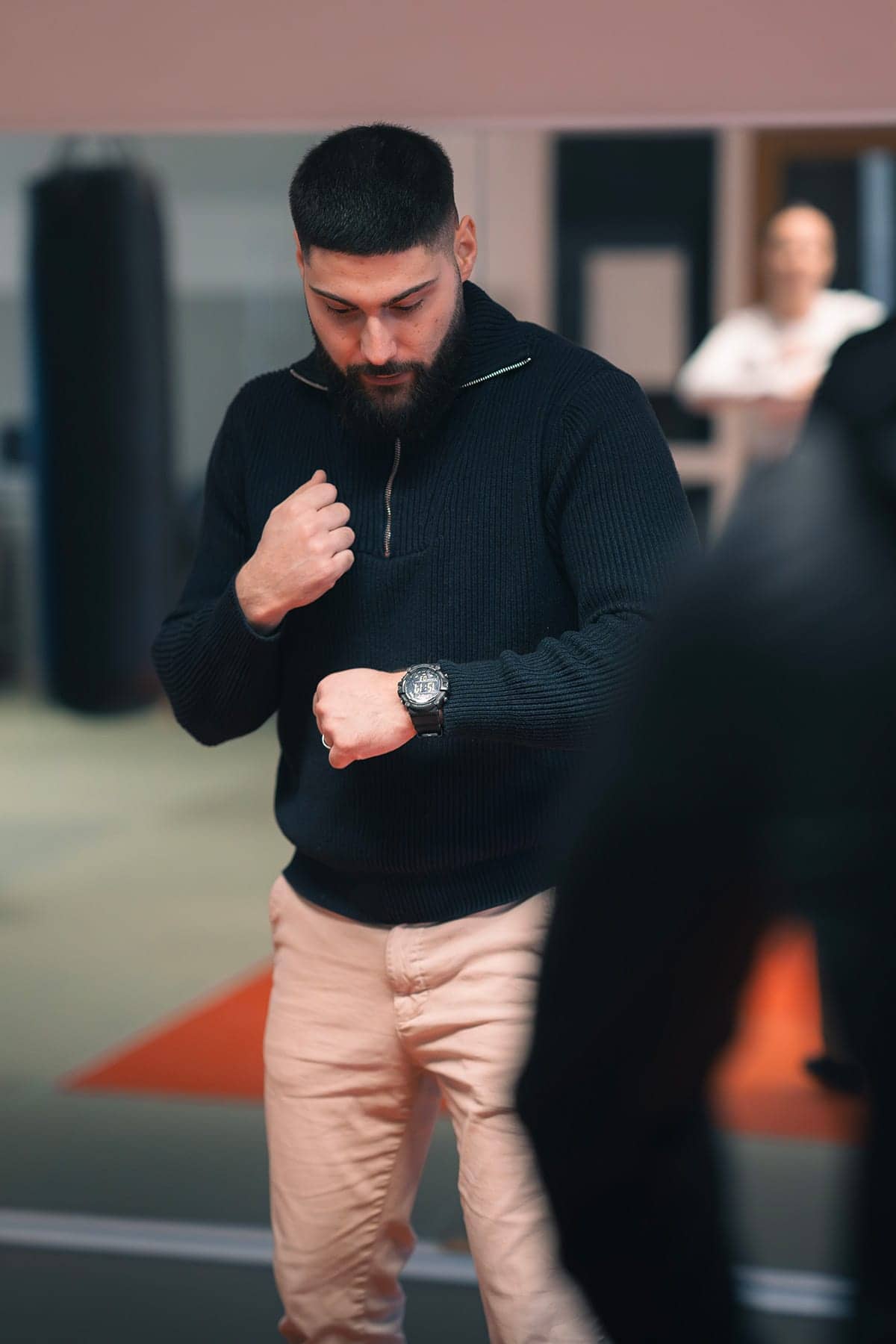
Content
What the training teaches
- 01
Early recognition
Reading body language, voice and behaviour; recognising when a situation is about to turn.
- 02
Communication
Addressing people calmly, clearly and respectfully, setting limits and offering a way out.
- 03
Distance and position
Where am I standing, where are the others, where is the exit? Using space to take the pressure off.
- 04
Officer safety
Protecting yourself and your colleagues before you help others.
- 05
Control techniques
Controlling, holding or escorting a person when there is no other option.
- 06
Acting as a team
Agreed procedures, roles and signals, so that everyone knows what to do when it really matters.
- 07
Acting under stress
Scenarios with realistic pressure, so that what you have learned is still there when you need it.
- 08
After the incident
Documentation, handover and a team debrief.
Who it is for
For teams where conflict is part of the job
Security staff
Entry control, enforcing house rules and events where conflict can be expected.
Typical situations
- Refusing entry at the door
- Intoxicated guests
- Groups with potential for conflict
Reception, service and administration
Teams in direct contact with angry or demanding people.
Typical situations
- Complaints at the counter
- Threatening phone calls
- Banning people from the premises
Facilities open to the public
Wherever people meet in stressful situations.
Typical situations
- Waiting areas
- Relatives under strain
- Conversations that escalate
Individuals
For anyone who wants to handle conflict more safely, at work or in private life.
Typical situations
- Clear communication
- Your own boundaries
- A confident manner
How it works
How a workshop works
Initial consultation
Your work environment, typical situations and the team's previous experience.
Fundamentals
How conflicts arise and escalate, early recognition and communication.
Practice
Distance, position, officer safety and simple control techniques.
Scenarios
Realistic situations from your everyday work, with increasing pressure.
Review
What worked, and what does the team need to agree on in future?
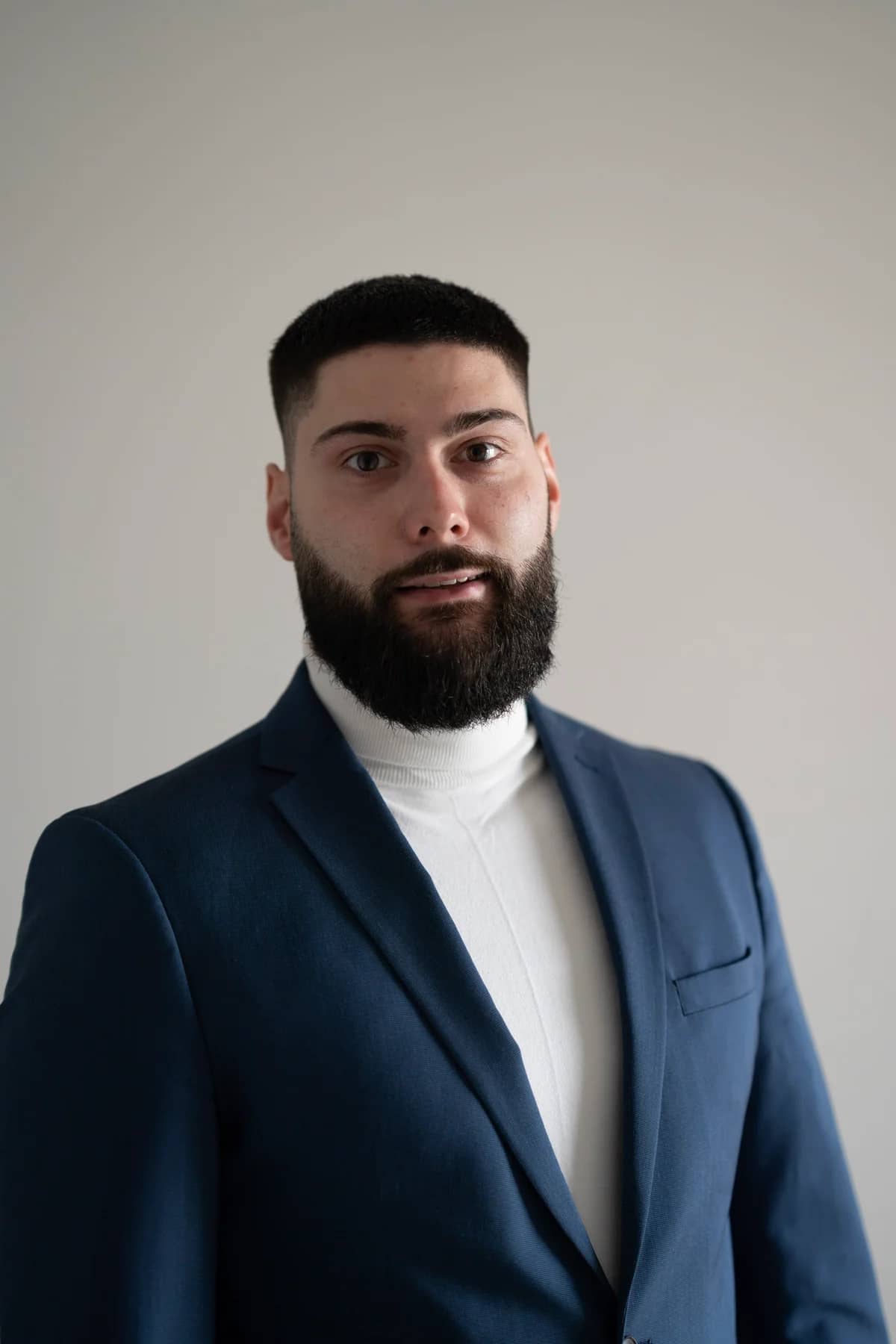
Accountability
Training based on real experience at the door and in the field.
Marc Derlich is a certified security and protection specialist (Fachkraft für Schutz und Sicherheit). He has worked in the security sector since 2016 and in close protection since 2020. He teaches what he knows from events and assignments: reading situations early, staying calm and acting as a team.
- Martial arts since 2002
- Certified security and protection specialist (Fachkraft für Schutz und Sicherheit, trained 2017 to 2020)
- Close protection training in Germany and abroad
- Active in close protection since 2020, in the security sector since 2016
- Several CQB training courses
- Close protection medic
- Evacuation from crisis regions
- Preparation for travel abroad
More training
Pairs well with de-escalation training
Frequently asked questions about de-escalation training
Who is de-escalation training suitable for?
For security staff, reception and service teams, employees in facilities open to the public and anyone who deals with tense situations at work.
Can the training take place at our premises?
We clarify that when you enquire. The advantage of training in your own work environment is that your rooms, routes and procedures can be built directly into the training.
Does the training include physical exercises?
Yes, in the security training: officer safety, breaking free from holds and simple control techniques. The scope and intensity depend on the target group and your preferences.
How long does a workshop last?
That depends on the group size and content, and is agreed when you enquire.
How much does de-escalation training cost?
Prices are available on request only and depend on the format, group size, location and scope.
Enquire about de-escalation training
Briefly tell us who the training is for and which situations are typical. Marc Derlich will get back to you personally.