
Close combat & operational techniques
Close combat training in Cologne – ready to act at close range
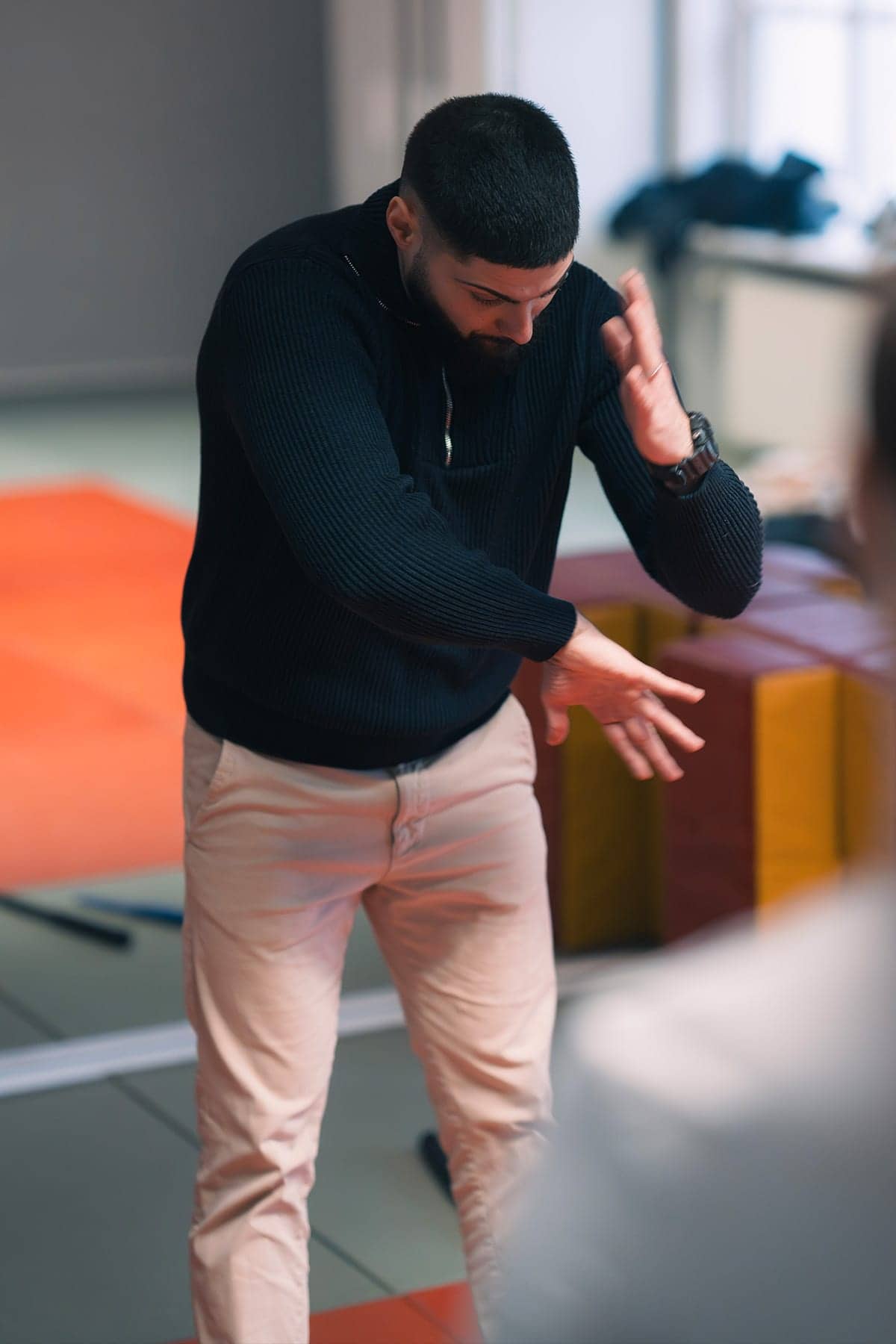
Close combat training for private individuals and security staff, built on boxing, wrestling and control holds: fending off attacks at close range, breaking free from holds, controlling an opponent and staying effective, even under stress. Led by Marc Derlich, who has practised martial arts since 2002 and worked in close protection since 2020.
At a glance
Close combat in brief
- What is close combat training?
- Training for close-range situations where stepping away or talking is no longer enough: fending off attacks, breaking free from holds and controlling an opponent. It includes operational techniques such as control holds and, for security staff, officer safety on duty. The aim is not to compete but to protect yourself and get to safety.
- What is the training based on?
- The training is built on boxing and wrestling, plus control holds. All three are practised with a partner and against resistance, not as rehearsed sequences. This builds reactions you can still call on when your heart is racing.
- Who is it for?
- For private individuals with or without previous experience, and for security staff and close protection officers who want focused training in officer safety and control techniques.
- What will I learn?
- From boxing: stance, guard, distance, footwork and defending against punches. From wrestling: balance, working in the clinch and breaking free from bear hugs. Plus control holds to restrain and guide an opponent, how to act in confined spaces and how to behave before, during and after a confrontation.
- One-to-one or in a group?
- Both: as one-to-one training with your own focus areas or in small groups. The content and pace are tailored to your level of experience and your goals.
- Where?
- In Cologne. The venue and dates are agreed when you make your enquiry.
- How much does it cost?
- Prices are available on request only and depend on the format, group size and scope.
Principles
Simple, direct, reliable under pressure.
At close range, there is no time to think. Your pulse and adrenaline rise, fine motor skills deteriorate and your field of vision narrows. That is why the training relies on what has proven effective in martial arts: boxing, wrestling and control holds. In other words, a few robust movements, repeated often, rather than a large repertoire.
On top of that comes the close protection perspective: recognising situations early, keeping your distance, avoiding conflict wherever possible and acting decisively where necessary. Controlled and proportionate.
- Boxing, wrestling and control holds at the core
- Avoidance and de-escalation before intervening
- Practising against resistance and under pressure
- Conduct after a confrontation
Training content
What you learn in training
- 01
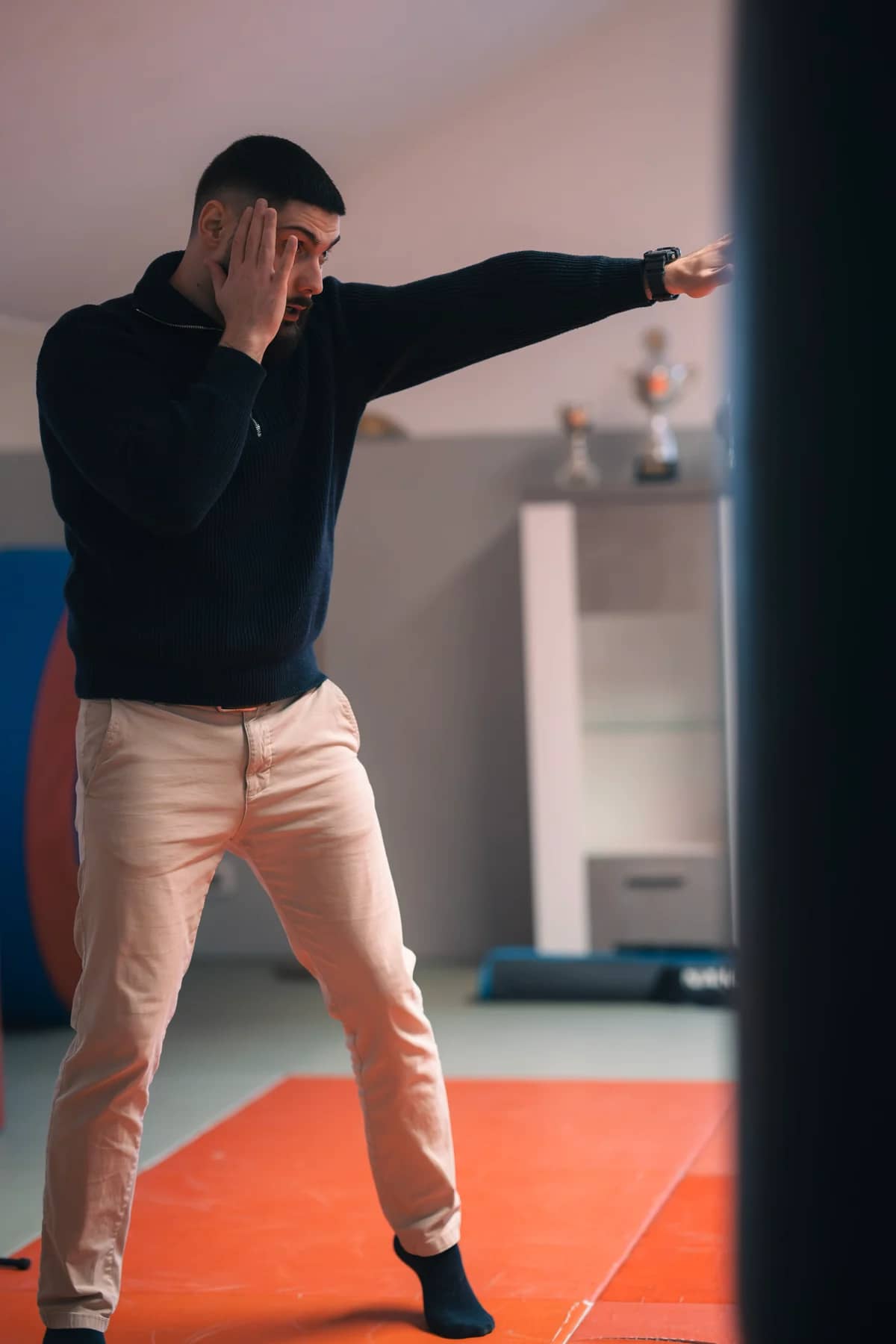
Boxing: stance, guard, distance
Basic stance, guard and footwork from boxing: the foundation for keeping or regaining distance.
- 02
Defending against attacks
Recognising, blocking and evading punches, plus reacting to shoves and kicks, even when taken by surprise.
- 03
Wrestling: balance and escapes
Standing firm, working in the clinch and breaking free from bear hugs, holds and chokeholds, even from a poor position.
- 04
Control holds and officer safety
Restraining and guiding an opponent with control holds, creating distance and protecting yourself at the same time – especially important for security staff.
- 05
Acting under stress
Drills under pressure, so that techniques still work when your heart is racing and space is tight.
- 06
Space and surroundings
Spotting danger early, keeping an eye on choke points, doors and exits, and using the space to your advantage.
How it works
How a training session works
Warm-up
Mobility work and movement, adapted to the group and its fitness level.
Technique
A technique or principle is demonstrated, explained and practised slowly.
Partner drill
Repetition with a partner, gradually faster and with more resistance.
Pressure testing
Drills and scenarios under stress, including in confined spaces, until you can rely on the technique.
Debrief
What worked, what needs more practice and what could have been done before the confrontation even started?
Focus areas
For private individuals and security staff
01
Private individuals
Self-protection for everyday life: breaking free, creating distance, getting to safety.
- No previous experience needed
- Defending against and escaping from holds
- Conduct before and after a confrontation
- One-to-one training or small group
02
Security staff
Officer safety on duty: at the entrance, on the floor and when escorting people.
- Officer safety and control techniques
- Acting in confined spaces
- Scenarios from day-to-day duty
- Team training on request
For aspiring and active close protection officers, there is also close protection training with a basic course and an advanced seminar.

Accountability
Training from someone who relies on it in the field.
Marc Derlich has practised martial arts since 2002 and has completed several CQB training courses, including with Projekt Gecko. He has worked as a close protection officer since 2020. In close combat training, he passes on what holds up under pressure: recognising danger early, staying calm and acting decisively when necessary.
- Martial arts since 2002
- Several CQB training courses, including with Projekt Gecko
- Certified security and protection specialist (Fachkraft für Schutz und Sicherheit, trained 2017 to 2020)
- Close protection training in Germany and abroad
- Active in close protection since 2020, in the security sector since 2016
- Close protection medic
- Evacuation from crisis regions
- Preparation for travel abroad
Frequently asked questions about close combat training
Do I need previous experience?
No. Training starts with the basics, and the pace and intensity are matched to your level. Experience in other martial arts is welcome but not a requirement.
What is the difference between close combat training and self-defence?
Both are based on martial arts. Self-defence in Cologne focuses on everyday situations, awareness and how you carry yourself. Close combat training goes further into physical contact: defence, escapes and control holds at close range, with more intensity and more pressure.
How is this different from regular martial arts training?
The foundation is martial arts, above all boxing and wrestling. The difference lies in the goal: no competition, no weight classes and no rules for a fair fight. The focus is on protecting yourself in a threatening situation, breaking free and getting to safety – or, on duty, controlling an opponent.
Is the training suitable for security staff?
Yes. Security staff and close protection officers can work in depth on officer safety, control techniques and on-duty scenarios, individually or as a team.
Is the training suitable for women?
Yes. What counts is technique, timing and balance, not strength alone. Intensity and contact are agreed in advance.
Are there fixed class times?
Dates are agreed when you enquire, for one-to-one training as well as for small groups.
How much does the training cost?
Prices are available on request only and depend on the format, group size and scope.
Enquire about close combat training
Tell us briefly whether you are interested in one-to-one or small-group training, for yourself or for work, and what previous experience you have. Marc Derlich will get back to you personally.